Business & Industry
The real estate business encompasses far more than simply buying and selling properties. It represents a complex ecosystem where development expertise, operational excellence, financial structuring, and technological innovation converge to create sustainable value. Whether you’re developing residential communities, managing commercial portfolios, or constructing specialized industrial facilities, success depends on mastering multiple disciplines simultaneously—each with its own technical requirements, risk profile, and optimization strategies.
This comprehensive resource introduces the fundamental pillars of building and scaling a real estate business. From the critical decisions made during project feasibility through the daily operational choices that determine profitability, we’ll explore how experienced operators navigate development challenges, maximize tenant relationships, leverage technology, and structure their organizations for long-term growth. Understanding these interconnected elements is essential for anyone looking to build a thriving real estate enterprise rather than simply managing individual assets.
Mastering Real Estate Development and Project Execution
Development represents the foundation of any real estate business, transforming capital and vision into tangible assets. Yet it’s also where the most significant risks concentrate. The difference between a profitable project and a costly failure often comes down to decisions made during the earliest planning stages and the rigor applied throughout execution.
From Feasibility to Delivery
Every successful development begins with a thorough feasibility study—a systematic analysis that examines market demand, site constraints, regulatory requirements, and financial projections. This methodology should answer fundamental questions: Does sufficient demand exist? Can the site accommodate the intended use? Will the numbers support the required returns after accounting for all costs and risks?
Think of feasibility analysis as building a financial model with built-in stress tests. Experienced developers don’t just calculate best-case scenarios; they model what happens when absorption slows by 30%, when construction costs overrun by 15%, or when interest rates rise mid-project. These scenarios reveal whether a project has sufficient margin for error or represents an unacceptable gamble.
Once development commences, rigorous project management becomes the primary determinant of success. This means establishing clear milestones, maintaining open communication channels with all stakeholders, and implementing systems to catch problems early when they’re still manageable. The root cause of most development failures isn’t typically a single catastrophic event—it’s the accumulation of small deviations that compound over time, eroding margins until the project becomes unviable.
Contract Structures and Risk Management
Selecting the appropriate contract structure significantly impacts both risk exposure and final project costs. The choice between fixed-price and cost-plus contracts represents a fundamental tradeoff: fixed-price agreements transfer cost risk to the contractor in exchange for reduced flexibility, while cost-plus structures maintain adaptability but require vigilant oversight to prevent budget creep.
One of the most insidious risks during construction is scope creep—the gradual expansion of project requirements beyond the original plan. A seemingly minor design enhancement here, an upgraded finish there, and suddenly you’ve added significant costs without adjusting your budget or timeline. Preventing scope creep requires discipline: every change must be formally evaluated for its impact on cost, schedule, and ultimate project value.
Timeline optimization deserves particular attention because time literally equals money in development. Every additional month of construction means another month of holding costs—loan interest, property taxes, insurance—without any offsetting revenue. Experienced developers work backward from their target completion date, identifying the critical path and potential bottlenecks, then allocate resources to compress timelines where the return on acceleration justifies the investment.
Residential Property Operations: The Revenue Engine
While development creates value through construction, residential property management creates value through operations. This is where consistent systems and attention to detail translate directly into net operating income. The difference between a mediocre operator and an excellent one often comes down to how effectively they manage two critical variables: tenant quality and property condition.
Tenant Acquisition and Retention
The true cost of tenant turnover extends far beyond the obvious expenses of advertising and cleaning. Consider the compounding impact: lost rent during vacancy, turnover costs averaging one to two months’ rent, the risk of property damage, and the uncertainty of your next tenant’s quality. When you calculate the total economic impact, retaining a good tenant becomes vastly more profitable than the constant churn of finding new ones.
This reality makes the tenant screening process one of your most important operational procedures. A systematic approach examines multiple data points:
- Credit history and score indicating financial responsibility
- Income verification ensuring rent represents a sustainable percentage of earnings
- Rental history and landlord references revealing past behavior
- Background checks identifying potential risk factors
The goal isn’t perfection—it’s probability. You’re trying to identify tenants most likely to pay consistently, maintain the property reasonably, and stay long-term.
When marketing vacant units, operators face a strategic choice between lower rent and tenant incentives. Lower base rent fills units quickly and may attract more applicants, but it permanently reduces your income on that lease and sets a lower comparable for future renewals. Incentives—such as one month free, spread across the lease term—achieve the same effective cost while preserving the stated rent rate. For most markets, incentives

How to Use IoT Tech to Reduce Industrial Operating Costs by 15% and Beyond
Strategic IoT integration is the most powerful lever for reducing building operating expenses and directly increasing Net Operating Income (NOI). Predictive maintenance on core systems like HVAC can prevent catastrophic failures and cut maintenance costs significantly. Choosing an open API…
Read more
Beyond the Founder: How to Build a Real Estate Empire That Lasts Generations
Your real estate company’s survival hinges not on finding a successor, but on systematically dismantling your own indispensability. A business that relies on your personal deal-making and relationships has an enterprise value of nearly zero without you. True legacy is…
Read more
How to Engineer Industrial Spaces That Maximize Tenant Manufacturing Efficiency
Attracting high-value manufacturing tenants requires shifting from a real estate mindset to an industrial engineering one, where the building itself becomes an integral part of their operational ecosystem. Structural specifications like slab thickness and clear height are not just features;…
Read more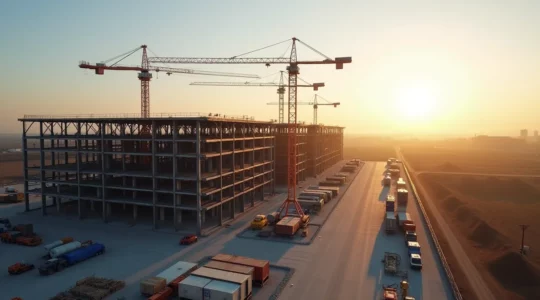
How to Develop a Class A Industrial Facility in a Supply-Constrained Market?
In summary: Success in today’s industrial market requires moving beyond basic “big box” construction and engineering a high-performance asset. Focus on non-negotiable specifications demanded by automated logistics: minimum 32-foot clear heights, robot-ready floors, and wide column spacing. Anticipate future tenant…
Read more
How to Transition From “Landlord with a Job” to “CEO of a Real Estate Firm”?
The critical shift from a successful landlord to a true Real Estate CEO is not about working harder, but about fundamentally redesigning your role from a hands-on ‘doer’ to a strategic ‘business architect’. Your most significant bottleneck is your own…
Read more
How to Negotiate Triple Net Leases for Truly Passive Income?
Truly passive income from a Triple Net (NNN) lease isn’t a default feature; it’s a financial fortress you must engineer through strategic negotiation. Tenant quality goes beyond the brand name; it requires a deep dive into their corporate balance sheet…
Read more
How to Keep Vacancy Rates Under 3% in a Downturn: A CEO’s Playbook
Keeping vacancy low isn’t about desperately lowering rent—it’s about shifting from a reactive landlord to a strategic CEO who actively manages asset value and Tenant Lifetime Value (TLV). Proactive maintenance offers over 300% ROI by preventing costly vacancies before they…
Read more
How to Secure a 20% Development Margin When Material Costs Are Skyrocketing
In summary: Protecting margins in an inflationary market requires proactive de-risking, not just reactive budget cuts. Rigorously stress-testing your pro forma against market dips is the first line of defense. Your choice of contract (Fixed Price vs. Cost Plus) acts…
Read more