
Keeping vacancy low isn’t about desperately lowering rent—it’s about shifting from a reactive landlord to a strategic CEO who actively manages asset value and Tenant Lifetime Value (TLV).
- Proactive maintenance offers over 300% ROI by preventing costly vacancies before they happen.
- Strategic tenant screening uncovers behavioral red flags that standard checks miss, securing stable, long-term tenants.
- Staggering lease expirations avoids seasonal slumps and maintains negotiation leverage year-round.
Recommendation: Stop focusing on filling empty units and start maximizing the value of occupied ones. Your goal is not just occupancy; it’s profitable, stable, and predictable cash flow.
In a volatile real estate market, a single “For Rent” sign can feel like a glaring symbol of failure. For property owners and managers, the pressure to fill a unit quickly leads to common, reactive decisions: dropping the rent, skipping a thorough background check, or deferring minor repairs. The conventional wisdom is that an occupied unit, even at a discount, is better than an empty one bleeding money. This approach treats vacancy as a simple math problem to be solved with short-term fixes.
But what if this entire mindset is flawed? What if the true cost of that vacancy isn’t just the lost rent, but a cascade of hidden expenses, operational drag, and long-term asset devaluation? As a tenant retention specialist, I’ve seen firsthand that the most successful property owners don’t just act like landlords; they operate like CEOs of a real estate firm. They understand that their most valuable asset isn’t the building itself, but the stable, high-quality tenants within it.
This guide abandons the panicked, reactive tactics. Instead, we will build a strategic framework to bulletproof your income stream. We will dissect the true financial impact of every vacancy, learn to identify and secure A-grade tenants, and implement proactive systems for maintenance and lease management. It’s time to transition from patching leaks to building an unsinkable ship, ensuring your vacancy rate stays consistently below the 3% threshold, even when the market turns against you.
For those who prefer a condensed, visual format, the following video provides an excellent overview of management templates and options that align with a strategic, CEO-level approach to your rental properties.
This article is structured as a playbook, guiding you from understanding the deep financial pains of vacancy to adopting the high-level mindset of a real estate CEO. Each section tackles a critical lever you can pull to fortify your portfolio and ensure consistent revenue. Explore the topics below to master the art and science of tenant retention.
Summary: A CEO’s Playbook for Minimizing Vacancy
- Why a Single Vacancy Costs You More Than $2,000 in Hidden Expenses?
- How to Spot “Professional Tenants” Before They Sign the Lease?
- Lowering Rent or Offering Free Month: Which Preserves Asset Value?
- The Deferred Maintenance Issues That Cause Your Best Tenants to Leave
- How to Stagger Lease Expirations to Avoid Mass Vacancy in Winter?
- The Danger of Relying on One High-Paying Tenant for Your Mortgage
- Why Pre-Building “Spec Suites” Attracts Tenants Who Need Speed?
- How to Transition From “Landlord with a Job” to “CEO of a Real Estate Firm”?
Why a Single Vacancy Costs You More Than $2,000 in Hidden Expenses?
The most common mistake property owners make is calculating vacancy cost as simply one month’s lost rent. This overlooks a brutal reality: the true financial damage is far greater. A vacant unit triggers a cascade of direct and indirect costs that erode your net operating income (NOI) and, consequently, your property’s capital value. With the national rental market showing signs of softening— projected to hit a 7.1% vacancy rate in Q1 2025, up from 6.6% the prior year—understanding these hidden costs is no longer optional.
First are the direct turnover expenses. These include professional cleaning, painting, and repairs to make the unit “rent-ready,” which can easily total between $500 and $2,000. Then come the marketing costs to list the property and the hours spent conducting showings. But the real damage lies in the “soft” costs. Carrying costs—mortgage, insurance, property taxes, and utilities—don’t pause just because the unit is empty. Every day a property sits vacant, you are paying to own an asset that generates zero revenue.
Furthermore, a lingering “For Rent” sign sends a negative market signal. It can weaken your negotiating position with prospective tenants for that unit and even adjacent ones. The most significant hidden cost is the impact on your property’s valuation. Since commercial and multi-family property values are often tied directly to NOI, every dollar lost to vacancy and turnover directly reduces your asset’s worth. A landlord who achieved a decade of zero vacancy saw rent climb from $2,150 to $4,000, demonstrating the immense compounding power of full occupancy. This isn’t just about cash flow; it’s about protecting and growing your fundamental investment.
How to Spot “Professional Tenants” Before They Sign the Lease?
The best way to minimize vacancy is to prevent it from ever happening, and that begins with rigorous, intelligent tenant screening. A “professional tenant” is an individual who understands landlord-tenant law better than you do and exploits it to live rent-free for as long as possible. They are masters of the system, often presenting a polished exterior that passes a superficial credit check. To protect your asset, you must shift from standard screening to strategic behavioral vetting.

Standard screening asks “what.” Strategic screening asks “how” and “why.” Instead of just verifying income and running a credit report, you need to dig into patterns of behavior. This is where you adopt the CEO mindset of risk mitigation. A key tactic is to move beyond the generic reference questions that previous landlords, eager to get rid of a problem, will answer positively. You need to ask questions that force a specific, verifiable response.
This table, based on best practices from property management experts, contrasts the standard approach with a strategic one designed to uncover red flags. As shown by a comparative analysis of screening questions, the right inquiries reveal stability and compliance patterns that a credit score never will.
| Standard Questions | Strategic Behavioral Questions | What They Reveal |
|---|---|---|
| Were they a good tenant? | What did you have to communicate more than once? | Patterns of non-compliance |
| Did they pay on time? | Under what circumstances would you NOT rent to them again? | Hidden red flags |
| Any complaints? | What was their reason for leaving the last 3 rentals? | Stability patterns |
Asking about the “reason for leaving the last 3 rentals” is particularly powerful. A single move for a job is normal; a pattern of short-term leases and moves every 12 months for vague reasons like “needing a change” is a major warning sign of instability. By focusing on behavioral history, you aren’t just filling a unit; you are selecting a long-term business partner for your real estate enterprise.
Lowering Rent or Offering Free Month: Which Preserves Asset Value?
When faced with a looming vacancy, the knee-jerk reaction is to offer a concession. The two most common are a permanent rent reduction or a one-time “free month” on a full-price lease. While both might secure a tenant, they have vastly different impacts on your property’s long-term value. A CEO-minded owner understands this distinction is critical. One option is a short-term cash flow fix; the other is a strategic move to protect asset valuation.
A single month of vacancy represents a significant financial hit, with one financial analysis showing an 8.4% reduction in annual rental income. This pressure often leads to the seemingly easier path: lowering the monthly rent. However, this is a dangerous trap. The “new” lower rent becomes the new baseline for that unit. It gets recorded in your financial statements and, more importantly, becomes a “comparable” for future appraisals and financing. A permanent reduction directly and negatively impacts your Gross Rental Income, which in turn lowers your NOI and the appraised value of your building.
Offering a “free month” or another one-time concession (like a waived application fee) is the strategically superior choice. With this approach, the official lease agreement still reflects the full market rent. For accounting and valuation purposes, your property is generating its maximum potential income. The concession is booked as a one-time marketing expense, not a permanent reduction in revenue. This preserves the all-important NOI figure. While your cash flow for that year is identical in both scenarios, the “free month” strategy protects your asset’s paper value, giving you more borrowing power and a higher sale price down the line. It’s a classic case of prioritizing long-term asset value preservation over a simple, short-term fix.
The Deferred Maintenance Issues That Cause Your Best Tenants to Leave
Good tenants—the ones who pay on time, respect the property, and communicate clearly—are your most valuable assets. Losing them over preventable issues is a cardinal sin in property management. The number one reason quality tenants leave is not a modest rent increase; it’s the frustration of dealing with deferred maintenance. A leaky faucet, a flickering light, or an unreliable appliance may seem minor, but they signal neglect and disrespect to a tenant who calls your property home.
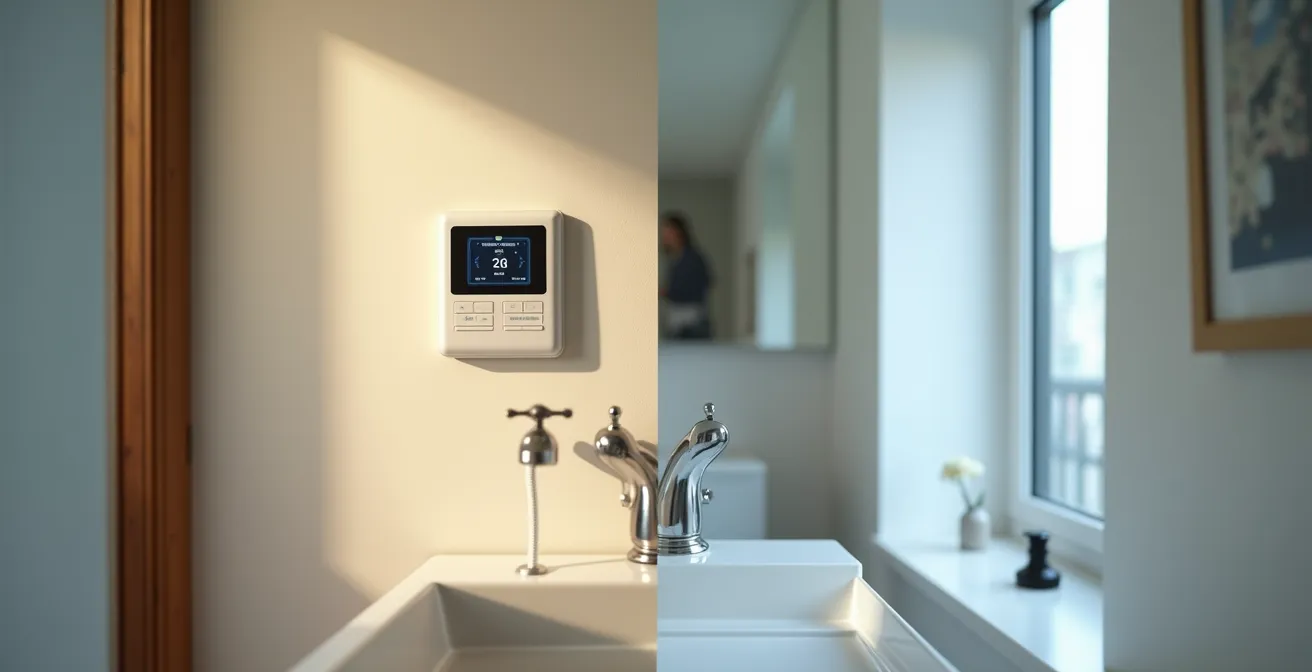
Reactive maintenance—fixing things only when they break—is a losing game. A strategic owner embraces proactive, preventative maintenance as a profit center, not a cost center. This means budgeting for and scheduling regular upgrades, even when things aren’t broken. Investing in modern conveniences tells a tenant you care about their experience and are reinvesting in their home. The financial case is overwhelmingly clear; property management data reveals a 300%+ ROI from $500 cosmetic upgrades that prevent a $2,000+ vacancy. An investment in new light fixtures, a smart thermostat, or modern USB outlets costs little but pays huge dividends in tenant satisfaction and retention.
This proactive approach creates a “retention moat” around your best tenants. When their lease is up for renewal, they aren’t just comparing your rent to a competitor’s; they’re comparing their well-maintained, modern home to an unknown quantity. The friction of moving suddenly seems much higher when their current home is actively being improved. Implementing a systematic upgrade strategy is the most powerful retention tool in your arsenal.
Action Plan: Your Proactive Upgrade Strategy
- Conduct quarterly walk-throughs to identify ‘aspirational’ maintenance opportunities, not just broken items.
- Create an annual upgrade budget allocating $500-1000 per unit for cosmetic and functional improvements.
- Survey tenants 90 days before renewal about desired improvements, showing you value their input.
- Prioritize upgrades that add modern conveniences: USB outlets, smart locks, improved lighting, or new faucets.
- Document all upgrades with before/after photos to justify modest rent increases and demonstrate value.
How to Stagger Lease Expirations to Avoid Mass Vacancy in Winter?
Managing a single vacancy is a challenge; managing multiple vacancies simultaneously is a financial crisis. This risk is especially acute for owners of multi-unit properties who sign all their leases at the same time, often leading to a mass expiration during the worst possible season: winter. The rental market is highly seasonal, and understanding these patterns is key to de-risking your portfolio.
During peak seasons (typically May through August), the pool of prospective tenants is large, and demand is high. This allows landlords to command higher rents and fill vacancies faster. Conversely, the winter months are notoriously slow. Fewer people want to move during the holidays or in bad weather, leading to a smaller tenant pool, longer vacancy periods, and downward pressure on rents. A landlord who has 3 out of 10 units become vacant in January is in a very weak negotiating position and may be forced to accept lower-quality tenants or offer steep discounts just to stop the bleeding.
The following data highlights the significant seasonal differences in vacancy across the country, showing a universal trend of winter being the off-season. This is why, as confirmed by an analysis of seasonal vacancy patterns, aligning lease expirations with peak seasons is a core strategic advantage.
| Region | Q2 2023 Vacancy Rate | Peak Season | Off-Season |
|---|---|---|---|
| South | 7.8% | Spring/Summer | Winter |
| Midwest | 6.9% | Summer | Winter |
| West | 5.0% | Summer/Fall | Winter |
| Northeast | 4.0% | Summer | Winter |
The solution is to stagger your lease expirations. Instead of signing uniform 12-month leases, offer strategic lease terms to ensure they expire during peak season. If a tenant moves in during October, offer them an 8-month or a 20-month lease, so the next renewal date falls in June. This may require some flexibility and planning, but it transforms your risk profile. By ensuring you never have more than one or two units turning over at a time—and always during high-demand months—you maintain maximum leverage and minimize the risk of a catastrophic, multi-unit vacancy event.
The Danger of Relying on One High-Paying Tenant for Your Mortgage
In a small multi-family property or a duplex, securing a high-paying tenant can feel like a major victory. Their single rent check might cover the entire mortgage, creating a sense of financial security. However, this is a dangerous illusion known as concentration risk. Relying on one tenant for the majority of your income makes your entire investment incredibly fragile. The unexpected departure of that single tenant—due to a job loss, relocation, or any other life event—can instantly turn a cash-flowing asset into a financial liability.
A healthy rental portfolio is a diversified one. While a 0% vacancy rate is the dream, it’s not always realistic or even healthy. Many experts suggest that a vacancy rate in the 5-10% range can be a sign of a balanced portfolio where rents are kept at market rate, rather than artificially suppressed to avoid any turnover. This cushion allows for strategic vacancies for upgrades and prevents over-reliance on any single tenant. The core principle is that no single tenant should represent more than 30% of your total rental income. If they do, you are exposed.
Mitigating concentration risk requires a CEO’s approach to financial planning. The first step is to build a dedicated vacancy reserve fund. This isn’t your general emergency fund; it’s a separate account specifically to cover carrying costs during a turnover. A good rule of thumb is to set aside 10-15% of the high-value tenant’s rent each month. Another powerful strategy is to secure a pre-approved line of credit equal to 3-6 months of your total mortgage payments. This provides an immediate liquidity buffer if your primary income source disappears. For long-term risk reduction, consider property subdivision where zoning allows—converting a large single-family home into a duplex instantly diversifies your income stream from one tenant to two.
Why Pre-Building “Spec Suites” Attracts Tenants Who Need Speed?
In the residential rental market, speed is a competitive advantage. The best tenants—often relocating for a new job or facing a tight moving deadline—are willing to pay a premium for convenience and certainty. They don’t have time to imagine what a unit *could* look like; they need a move-in ready solution now. This is where the concept of a “spec suite,” borrowed from the commercial real estate world, becomes a powerful tool for residential landlords.

A spec suite is a unit that is not just clean, but fully optimized and often lightly staged to be “turnkey.” It showcases the property’s maximum potential. This means fresh, neutral paint, professionally cleaned carpets, all appliances in perfect working order, and perhaps even some modern, minimalist furniture to help tenants visualize the space. It goes beyond “rent-ready” to “model-home-ready.” The goal is to eliminate every possible friction point for a prospective tenant. When they walk in, their immediate reaction should be, “I could move in tomorrow.”
This strategy directly targets high-quality tenants who value their time more than a small discount. They are often less price-sensitive and more quality-sensitive. By investing in a spec suite, you are filtering for a more discerning client. The results are clear, with property managers reporting an impressive fill time on well-maintained listings. As the Marketplace Homes’ Property Management Best Practices Report notes:
An average 17-day fill time on listings at fair market value in good condition.
– Marketplace Homes, Property Management Best Practices Report
This speed drastically reduces the carrying costs of vacancy. While it requires an upfront investment, the ability to attract a premium tenant and fill a unit in half the time of a competitor provides a significant return, cementing the spec suite as an offensive strategy for maximizing revenue.
Key Takeaways
- The true cost of vacancy includes turnover expenses, carrying costs, and long-term asset devaluation, not just lost rent.
- Proactive maintenance and strategic upgrades yield massive ROI by preventing the top reason good tenants leave.
- A CEO’s mindset involves managing a portfolio by tracking strategic KPIs like Tenant Lifetime Value (TLV) and Vacancy Loss Percentage, not just rent collected.
How to Transition From “Landlord with a Job” to “CEO of a Real Estate Firm”?
The ultimate strategy for keeping vacancy below 3% is a fundamental shift in identity. Many property owners are “landlords with a job”—they own real estate, but their primary activity is reacting to problems: a broken pipe, a missed rent payment, a vacant unit. A CEO, by contrast, spends their time working *on* the business, not just *in* it. They build systems, analyze data, and make strategic decisions to grow the value of their entire portfolio.
This transition begins with what you measure. A landlord tracks “rent collected” and “vacant units.” A CEO tracks Tenant Lifetime Value (TLV), Vacancy Loss Percentage, and Maintenance Cost per Unit. These Key Performance Indicators (KPIs) shift the focus from day-to-day cash flow to long-term portfolio health and operational efficiency. The goal is no longer just to have tenants, but to have a growing Net Operating Income (NOI) across the entire portfolio.
This table illustrates the critical mindset shift reflected in the metrics you choose to monitor:
| Traditional Metrics | CEO-Level KPIs | Strategic Impact |
|---|---|---|
| Rent collected | Tenant Lifetime Value (TLV) | Long-term revenue optimization |
| Vacant units | Vacancy Loss Percentage | Portfolio efficiency measure |
| Repair costs | Maintenance Cost per Unit | Operational efficiency benchmark |
Adopting this CEO mindset means investing in systems that create leverage. This includes using modern property management software to automate rent collection, track maintenance requests, and provide you with a real-time dashboard of your portfolio’s financial health. Systems like Property Meld provide owners with direct visibility of maintenance tickets, creating transparency and efficiency. It means standardizing your processes for screening, onboarding, and lease renewals. It means treating your real estate holdings not as a collection of individual rentals, but as a single, cohesive business enterprise poised for sustainable growth.
By shifting your focus from filling units to retaining quality tenants, from fixing problems to preventing them, and from tracking rent to analyzing portfolio-wide KPIs, you are no longer at the mercy of the market. You are in control. Start implementing these CEO-level strategies today to build a resilient, profitable, and consistently low-vacancy real estate business.